Tuesday, March 27, 2012

Growth spurt

Sometime last February I received a text message from my mother. She said she was very delightfully surprised when she went to check and clean the area around the row of Oldham bamboo (Bambusa oldhamii) seedlings*. Almost all of them have suddenly produced shoots that are over 6 feet tall, some are even taller than the nearby concrete wall. And these shoots were not there yet when she last cleaned the area a few days before.


New shoots are now growing tall, some are even taller than the wall.


Soon this row of bamboos will provide a privacy screen from our neighbors across the street.

Their new trunks are still skinny but their sudden appearance is an indication that these seedlings* are now adapted to their new environment. They need a lot more time to mature, their trunks will eventually reach a height of 40-60 feet with culms of 3-5 inches in diameter.


Eventually these bamboos will be taller than those giant heliconias in the background.


More signs of new growth.

I too was very glad to receive this pleasant news and could not wait to see the pictures. Early this month I got to see what the shoots look like and I am now even more determined to complete my green privacy screen project which has been in limbo due to the exorbitant cost of one small Oldham bamboo seedling*.


----------
* For lack of knowledge of the proper term, I call the young bamboos "seedlings" even though they were a product of vegetative propagation (either branch node cutting or air-layering).

Friday, March 16, 2012

A royal affair

One February morning our three dependable farmhands' daily routine has been altered for a couple of days. Although it seldom happens they are now used to this kind of unscheduled disruption. Almost always, this break in their daily routine is caused by someone who lives thousands of miles away.


Latest batch of Royal palms delivered to the farm one morning last February.


Unloaded and resting under the tall Royal palms. The palm on the left is a Golden Veitchia.

This time they have to plant ten (10) newly bought Royal palms. Some of the palms arrived bare root. They have been dug up a day before from a nursery in a neighboring province just south of where the farm is. Because of the state they're in, these Royal palms needed to be transplanted immediately.


One by one the palms are transported to the upper garden using an ever reliable water buffalo.


On their way to the upper garden. This method of transport using water buffalo is a typical rural (provincial) scene.


A few days after the transplant. These Royal palms are not out of the woods yet, only time will tell if they will survive.

Almost every plant suffers a transplant shock especially if the roots have been drastically disturbed. These palms are no different. In fact even the Royal palms that were transplanted last November have not yet completely recovered despite an almost daily dose of rainwater.

Summer has finally arrived and the forecast is a wet summer this year. If this is true then this is good for the sake of these plants which are now acclimatizing to a new life in the farm.

Tuesday, March 13, 2012

Picture perfect


And to think that over a year ago I was so worried that we were not having any success in propagating our Lotus plant from the one and only mother plant we had back then. But patience and perseverance prevailed.

Wednesday, February 29, 2012

Garden update #10 - vertically challenged

It's been a long time since I've made an update on new plants for the garden. The last such update was "Garden update #9 - this time no new plants," which was posted in May, 2010. And even that post mentioned no new plant purchases.

For various reasons, all connected to the farm, I had to slow down with plant acquisitions. But from time to time (as dictated by necessity) I still manage to buy a few. So, as far as I can remember, below is the list of plant purchases since my last garden update.

February 2012:
  • Roystonea regia - "Royal Palm"
  • Cordyline spp. - "Ti Plant"
  • Veitchia merrilli - "Golden Veitchia"
  • Tabernaemontana pandacaqui - "Pandakaki-puti"

November 2011:
  • Bambusa blumeana - "'Tinik' Bamboo"
  • Bambusa oldhamii - "Oldham Bamboo"
  • Dendrocalamus asper - "Giant Bamboo"
  • Dendrocalamus latiflorus - "Machiku Bamboo"
  • Guadua angustifolia - "Colombian Thorny (or Iron) Bamboo"
  • Roystonea regia - "Royal Palm"

February 2011:
  • Wodyetia bifurcata - "Foxtail Palm"
  • Dypsis decaryi - "Triangle Palm"

January 2011:
  • Passiflora caerulea - "Blue Passion Flower Vine"
  • Passiflora spp. - "Lavender Passion Flower Vine"
  • Passiflora manicata - "Red Passion Flower Vine"


Last year's batch of Triangle and Foxtail palms.

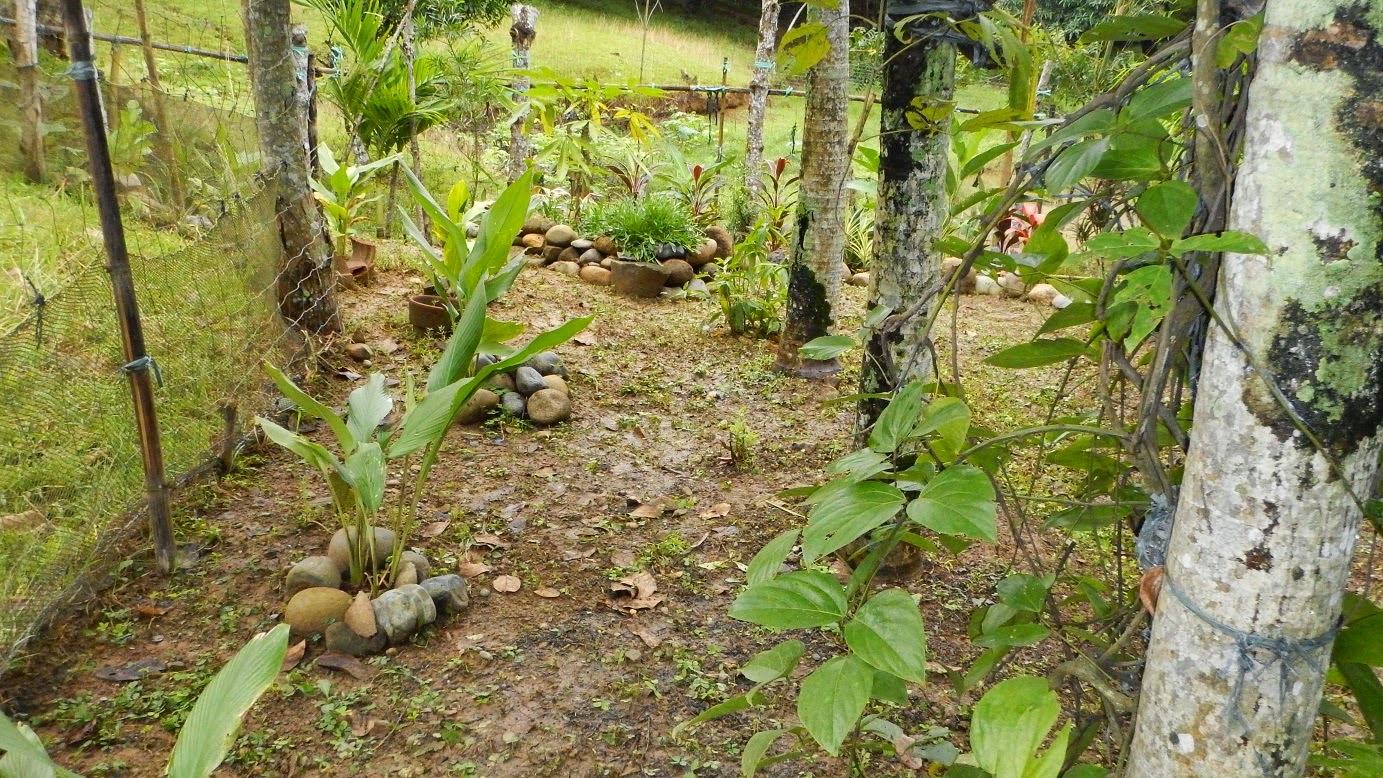
Since February, 2011 I have been concentrating on purchasing palm trees and bamboos. Two days ago, 10 Royal Palms were delivered to the farm. Today and the coming days they will be planted in the upper garden, along a portion of the left side of the dirt path. These are in addition to the first 7 that were planted there in random locations last January. More ornamental palm trees are needed to populate the sparsely vegetated upper garden.

Another part of the upper garden has been planted mostly with coconut tree seedlings. The seedlings came from the farm's few coconut trees.


Three of the Oldham bamboos, pictures taken last month.

As for the bamboos, I still need 100+ of Oldham bamboo seedlings to complete my privacy screen project. There are exciting developments with our first 19 Oldhams (with 1 casualty). But that will be for a future post since I don't have supporting pictures yet.

Notice that most of the new purchases are plants with the ability to grow tall. With blessings from above, many more of these will be planted in the future.

Tuesday, February 21, 2012

First water garden... 5 months later

It's been over five months since the first water garden was constructed. Let's see how it's doing now.


From the looks of it, the aquatic plants are loving their new home. Much of the water surface is now covered with foliage. In a few areas not covered with leaves you will catch a glimpse of the fishes swimming. The adult Tilapias have been removed from the pond. They found their new home too cozy for reproduction that they started to make baby Tilapias. Now only Kois and Tilapia fingerlings inhabit the pond.

Thursday, February 16, 2012

Hold the torch

I hold the torch for a certain ginger-head. I showered her with care, tender touch and kindness. But alas, the attentions I gave were all left unrequited.

But years of persistent waiting, though truly exasperating, has finally bore its fruit. Our Torch Ginger (Etlingera elatior) has blossomed!

Just like the Bird of Paradise, this plant has kept me waiting for so many years to see it bloom. Last year, after three years plus of waiting, the former granted my wish. With that, I thought the latter's turn will come very soon.

With almost four years of no luck I was inclined to conclude I'm waiting for a flower to sprout from the wrong plant. Whenever I see posts of the Torch Ginger from other bloggers I can't help myself but be envious. One blogger friend, Africanaussie, suggested I send her pictures of our ginger so she can help verify if it is really a Torch Ginger. Immediately I asked my mother to take a picture of the said plant, but since we now have different species of gingers in the garden, she's already confused as to which plant is which.


Then one January morning, as mother was going around the garden to check on the plants, lo and behold, two Torch Gingers are in bloom. They may only have one flower each but that is more than enough for me, I'm happy!

Monday, February 13, 2012

Annual visit

I really do wish I could make annual visits to the farm. Although this is something that I could not do yearly, I found out just a year ago that we do have annual visitors.

About this same time last year I noticed these white birds flying in and out of the farm, mingling with the grazing sheep. I think they are egrets. I inquired about this from my father and he said they come during the early part of the year and stay for a few weeks. Cool! The farm gets some wildlife visitors annually.


What other wildlife visit the farm?

Years ago I also learned that fruit bats roost under the canopy of the four mature Royal Palms. This may be the reason why we don't see any fruits from these palm trees. There are also undesirable guests like snakes and monitor lizards that make their presence known from time to time.